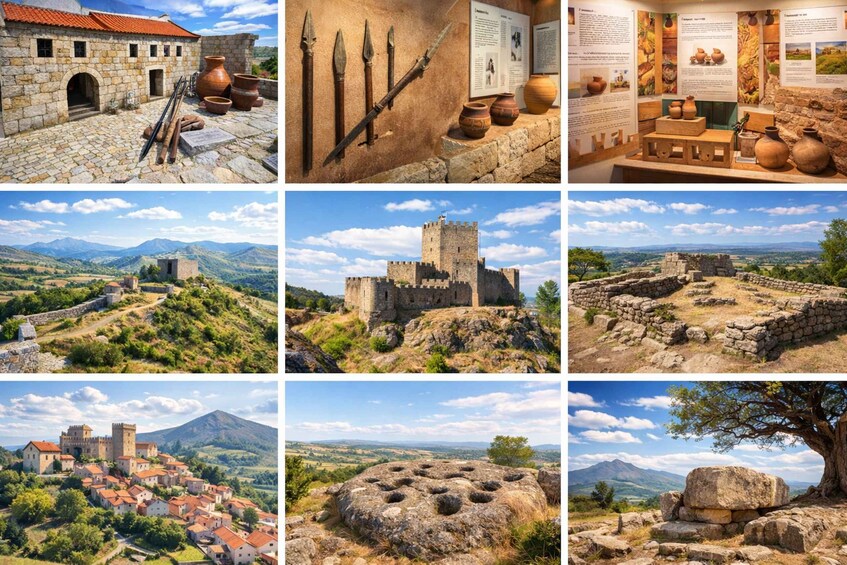
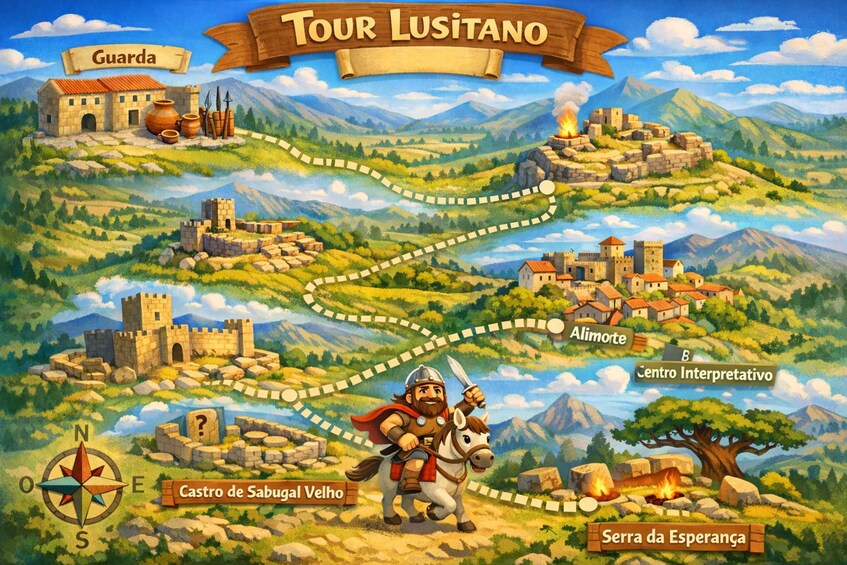
Begin at the Guarda Museum, where carefully preserved artefacts—including pre-Roman ceramics, iron weapons, and votive objects—reveal the daily life, craftsmanship, and martial prowess of Lusitanian tribes such as the Igaeditani, Tapori, and Lancienses. Learn how these communities thrived long before the Roman conquest, shaping a culture deeply rooted in ritual, warfare, and artisan traditions.
Next, venture to the Castro do Tintinolho, a hilltop fortification of the Iron Age. Here, remnants of stone walls, circular platforms, and strategic vantage points paint a vivid picture of Lusitanian resistance against Roman incursions. Discover the ingenious communication networks and guerrilla tactics employed by these tribes, and hear the legend of Viriato, the famed Lusitanian leader who cleverly used the terrain to outsmart his adversaries.
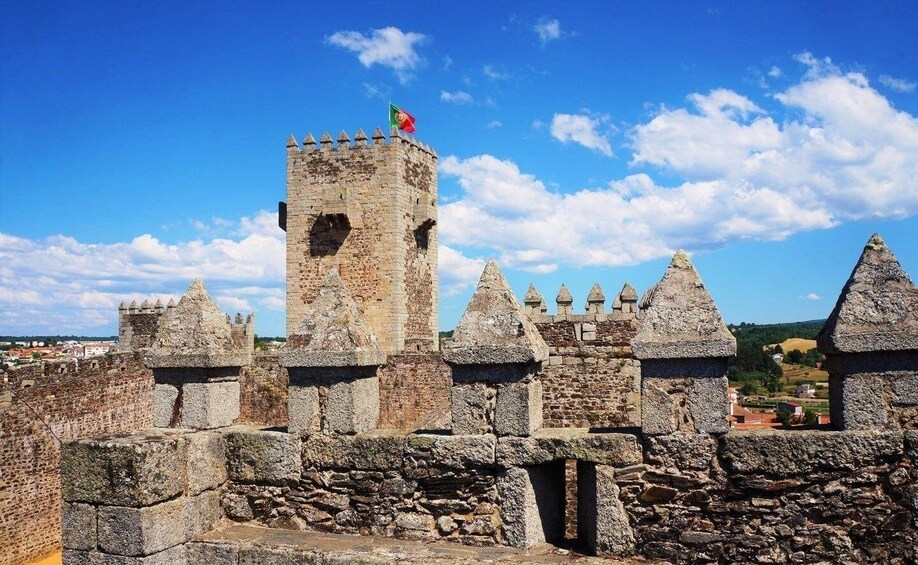
Continue to the Castle of Sabugal, a medieval fortress built upon an ancient strategic plateau. Archaeological evidence reveals that the site was occupied for centuries, serving as a lookout and defensive point since pre-Roman times. Explore the castle’s battlements and imagine the generations of warriors and communities that once monitored the valleys of the Côa and Zêzere rivers.
Nearby, the Castro de Sabugal Velho offers another glimpse into ancient life, with well-preserved oval walls, circular dwellings, and possible ritual spaces. Local legends speak of a “guardian spirit” that lingers among the ruins, echoing the mystical connection between the Lusitanians and their sacred sites.
After a scenic drive along the Serra da Esperança, arrive in Belmonte, a town steeped in history and culture. At the Interpretative Centre, explore detailed exhibits about the transition from pre-Roman castros to Roman villae, and how the region adapted over centuries. Finally, ascend the Serra da Esperança, where ancient worship sites, sacred rocks, and centenary trees evoke the spiritual practices and myths of past civilisations. Here, the legend of the Pedra da Mua comes alive, a stone said to tremble during storms, recalling rites and rituals of a bygone era.