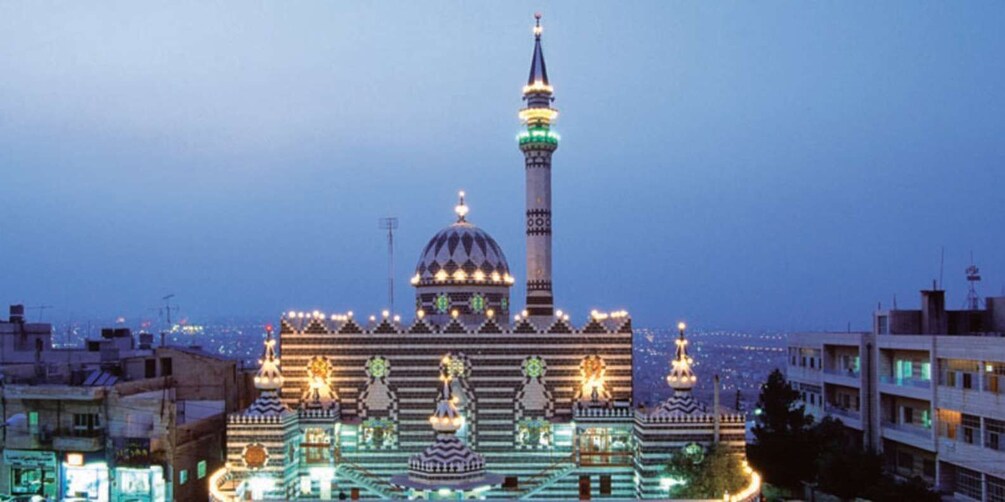
Begin your tour with a visit to the Abu Darwish Mosque, a distinctive and prominent mosque in Amman, Jordan, known for its unique black-and-white striped facade. Constructed in 1961 atop Jabal al-Ashrafiyeh, one of Amman's highest hills, its elevated position offers panoramic city views, making it a highly visible landmark.
Admire its facade, built from alternating black and white stone, which reflects traditional Levantine architecture with Mamluk and Ottoman influences. Features a large dome and two 36-meter-tall minarets. The interior is adorned with intricate Islamic calligraphy and mosaic tiles, accommodating a large number of worshippers.
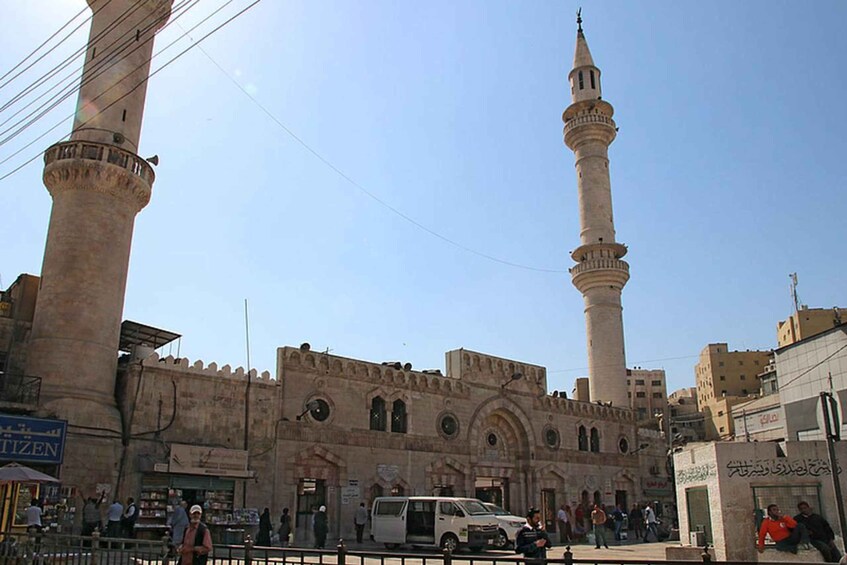
Continue to the King Abdullah I Mosque, one of Amman, Jordan's oldest mosques, deeply intertwined with the city's past and present. The original mosque was built on this site in 640 AD by Omar ibn Al-Khattab, the second Caliph of Islam, believed to have been constructed on the site of a former Byzantine basilica.
The current Ottoman-style mosque was rebuilt in 1924 by King Abdullah I, named in honour of his father, Sharif Hussein bin Ali, leader of the Great Arab Revolt. It has undergone several renovations and expansions, including in the 1980s and after a 2019 fire. Known for its striking pink and white stone facade, it features two visible minarets and comprises a prayer hall, a courtyard, and a domed fountain for ablution.
Next, head to the King Hussein Mosque, one of Amman, Jordan's most famous and recognisable landmarks. Built between 1982 and 1989 by the late King Hussein as a memorial to his grandfather, King Abdullah I, founder of modern Jordan, it served as Jordan's national mosque until 2006.
Notable for its open-door policy, which welcomes non-Muslim visitors to learn about Islamic worship and culture, this is a rare feature among Amman's mosques. A stunning example of contemporary Islamic architecture, its most prominent feature is the magnificent blue mosaic dome, 35 metres in diameter, a significant part of Amman's skyline.
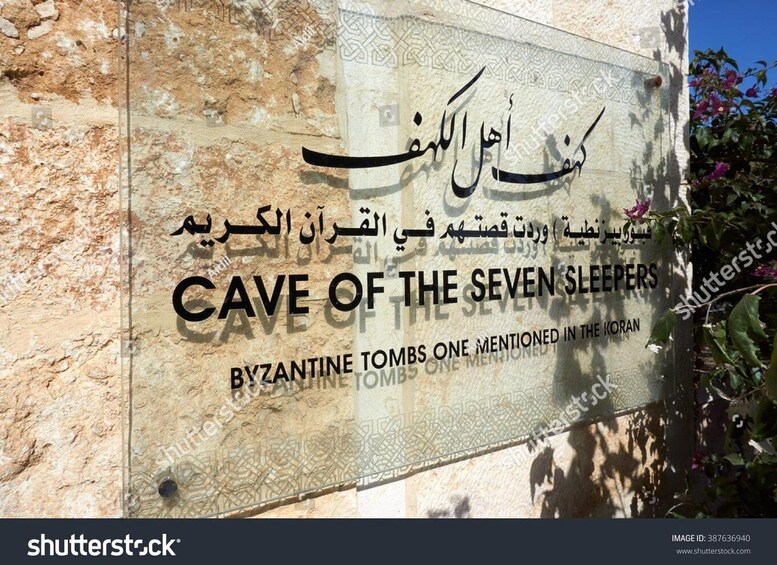
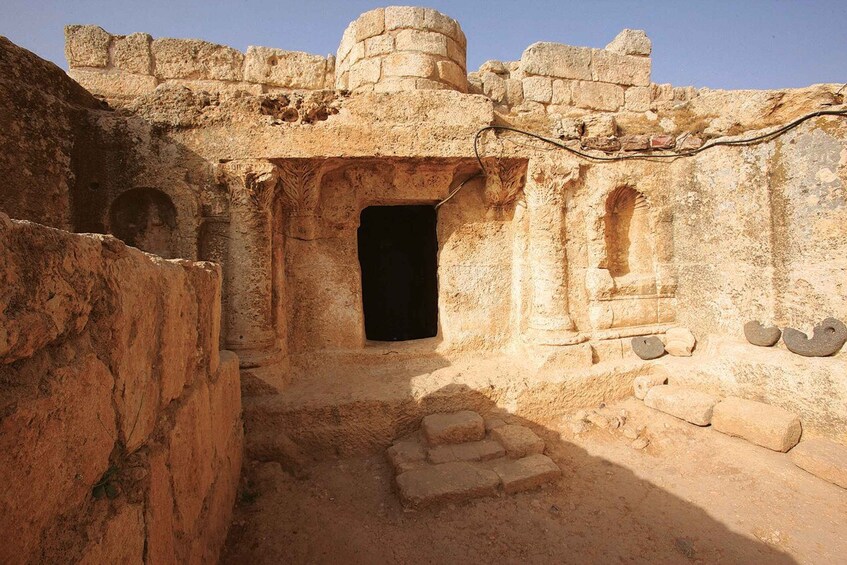
Finally, drive 20 minutes from Amman to Ka'f Al-Raqim, also known as the Cave of the Seven Sleepers. The legend, found in Christian texts and the Quran (Surah Al-Kahf, Chapter 18), tells of pious youths who fled persecution by a pagan emperor (often Decius). They sought refuge in a cave, miraculously sleeping for centuries. Upon waking, they found Christianity dominant and died after revealing their storey, revered as saints.
The site in the village of al-Rajib (etymologically similar to “al-Raqim” in the Quran) is a strong contender for the actual cave. Excavated in 1963, revealing a partially natural, partially man-made structure. Inside, there are tombs or sarcophagi, one of which has human bones visible through a small hole. The site also features the ruins of a Byzantine church converted into a mosque, with a visible mihrab (prayer niche), indicating a shared historical significance for both Christians and Muslims.