Ways to light the fire and create the coals.
Setting up the grill and getting it to the right temperature.
Selection of meats and seasoning.
Cooking and browning control.
Wine tasting and pairing.
Informative and descriptive talks.
Ways to present it on the table and how to pair it.
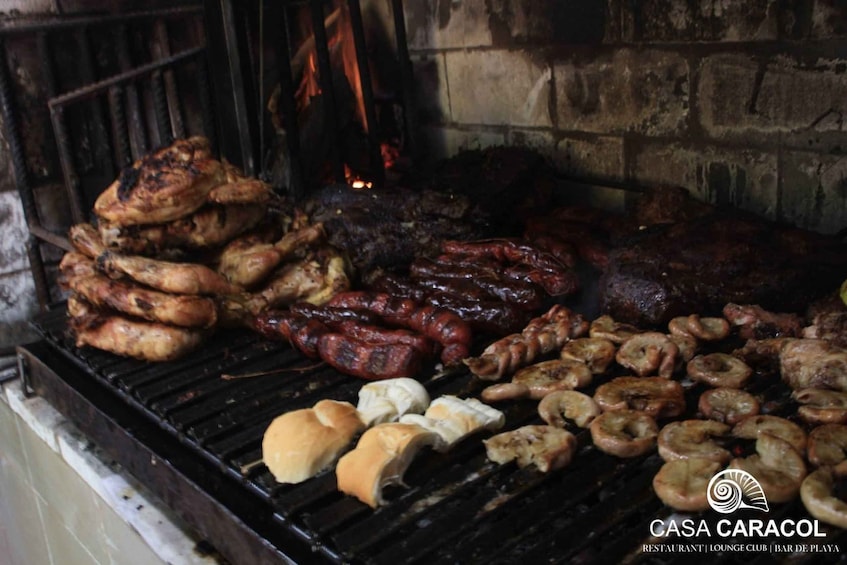
Eating asado is an Argentine culinary tradition that involves a specific sequence of cuts and a way of serving the meat to maximise flavour and the social experience. Tradition dictates starting with the less noble parts of the animal, such as blood sausages, chinchulines, and chorizos, then moving on to the thick cuts, and finally to the finer pieces such as steaks and fillets.
There are eight main ways to prepare and serve the asado, depending on the cuts and the tools available:
Quick grilling: Ideal for thin cuts such as ribs, steaks, chinchulines, and sweetbreads, with high heat and little charcoal.
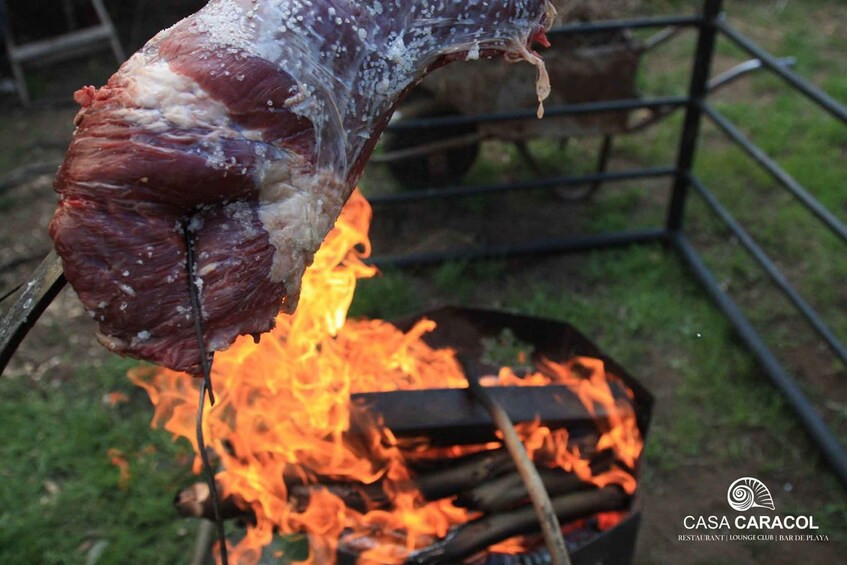
Slow grilled: Designed for large pieces such as flank steak, rump tail, chuck, and kid, requiring low heat and prolonged cooking.
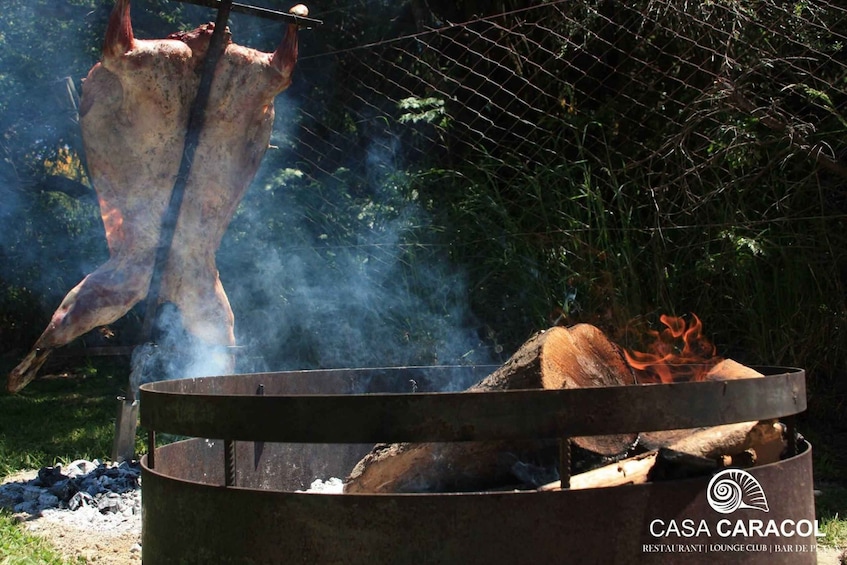
Over the flame: An open-air method with a wooden cross, where the ribs are roasted for hours against the wind.
In a Chilean oven: Use a preheated earthen oven to roast whole animals or large cuts such as piglets and lambs.
On the embers: An emergency technique that involves wrapping the meat in paper to cook it on the remaining embers of the fire.
Two-fire: Slow cooking with heat from above (griddle) and below (embers), perfect for large animals over eight kilos.
On a stick: The meat is skewered with a green stick and roasted over the embers in the countryside.
Grilled: For small cuts and offal, cooked on a hot surface without embers.