Two thousand years ago, the Apostle Paul walked into Corinth — one of the most powerful and morally complex cities of the Roman world — and stayed for eighteen months. He preached in the agora, wrote both letters to the Thessalonians here, stood trial before the Roman proconsul Gallio, and sailed from the port of Cenchreae towards Ephesus. This private tour follows his footsteps in the same order he made them.
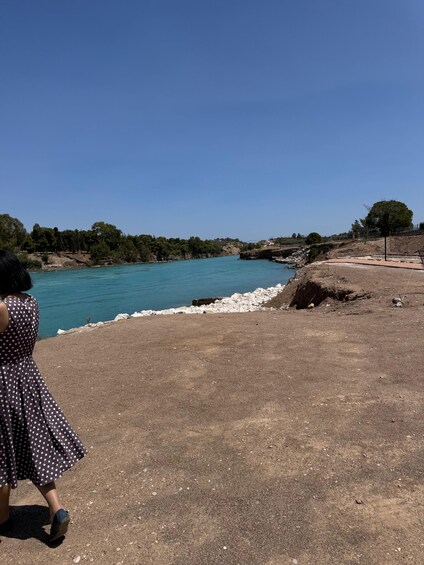
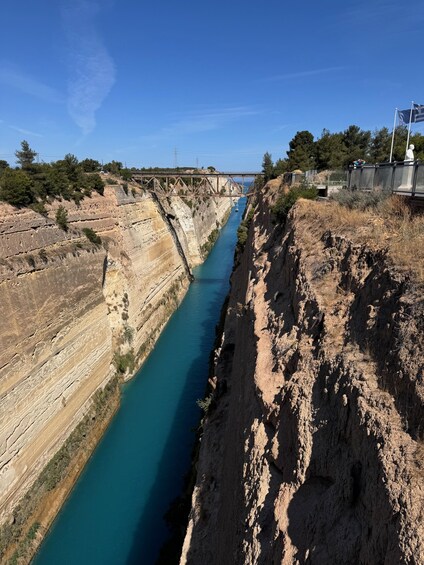
You'll leave Athens and drive west, crossing the Corinth Canal — the narrow waterway cut through the isthmus in 1893, completing what ancient engineers only dreamed of. A short stop on the bridge for the view straight down: 80 metres of sheer rock and the blue water below.
A short distance away lies the Diolkos — the ancient stone trackway the Greeks built to drag entire ships across the isthmus before any canal existed. The wheel grooves are still cut into the rock. This is the road Paul almost certainly saw in operation when he arrived, the engineering marvel that made Corinth rich and kept it at the centre of Mediterranean trade.
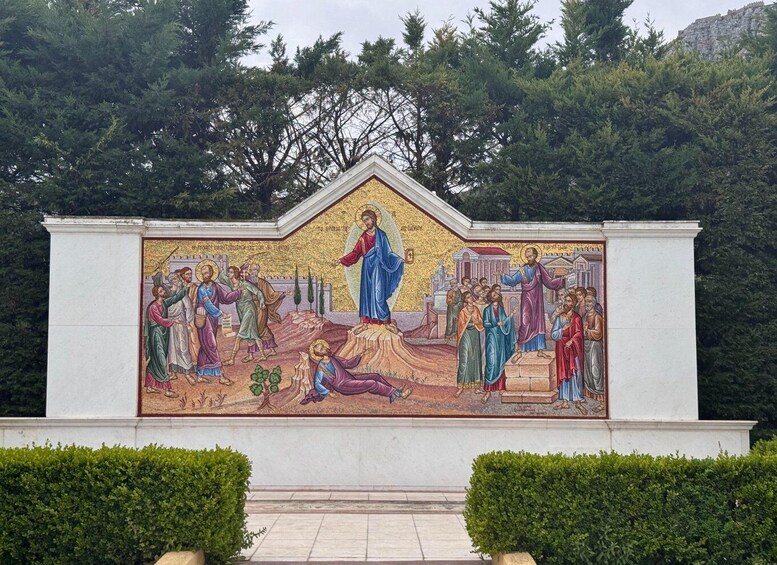
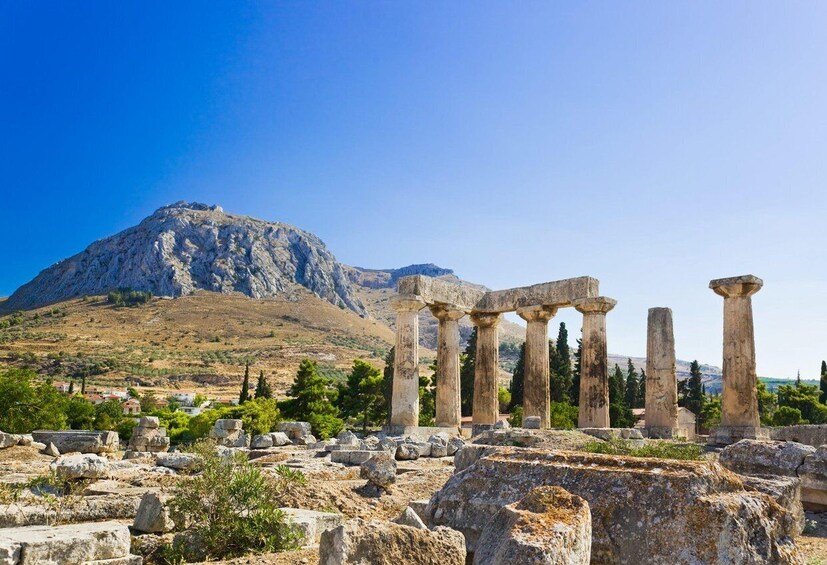
Then comes Ancient Corinth itself, the heart of the tour. You'll walk the marble streets of one of the wealthiest cities in the Roman Empire. The Temple of Apollo still rises above the ruins. The Bema platform — where Paul stood trial before Gallio, exactly as described in Acts 18:12–17 — is still here, the same stones, the same open sky above.
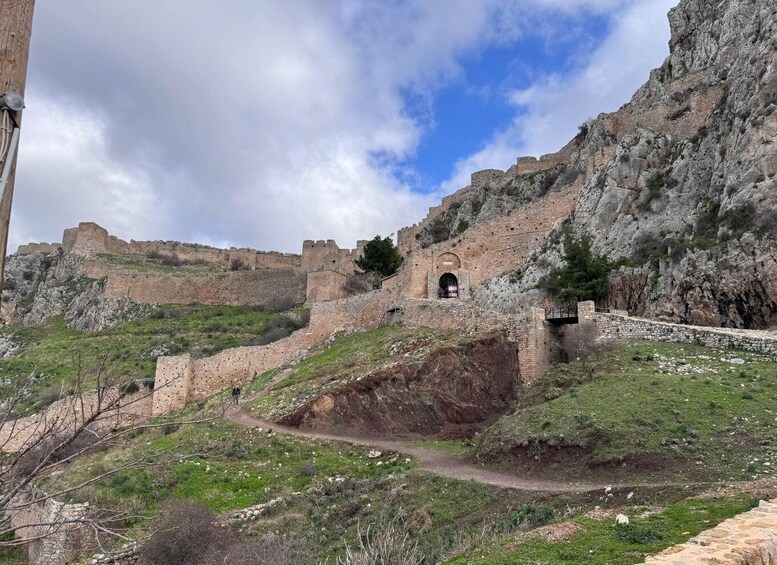
For those who want to go higher, the optional ascent of Acrocorinth adds another layer. At its summit once stood the Temple of Aphrodite, the cult whose excesses gave Corinth its ancient reputation and which Paul confronted directly in his letters. The Upper Peirene Spring, mythological birthplace of Pegasus, is nearby. From the top, the Saronic Gulf opens to the east, the Gulf of Corinth to the west — the whole landscape of Paul's ministry spread out below.
A relaxed lunch fits naturally in the middle of the day — a taverna in the village of Ancient Corinth, or a seaside spot on the road to Cenchreae.
The day ends where Paul's chapter in Corinth ended. You'll follow the ancient road east to Cenchreae — Corinth's eastern harbour on the Saronic coast, from which Paul sailed for Ephesus after fulfilling his Nazarite vow (Acts 18:18). Phoebe, the deaconess he names in Romans 16:1, served the early church here. The stones of the ancient quay are still visible — some above the waterline, some below. Standing on this shore, looking out at the same sea Paul saw as the ship pulled away, is the quiet close to a day spent entirely in his footsteps.
This tour is designed for Christian travellers, religious groups, Bible study communities, pastors leading their congregations, and anyone drawn to the places where faith and history meet on the same ground.