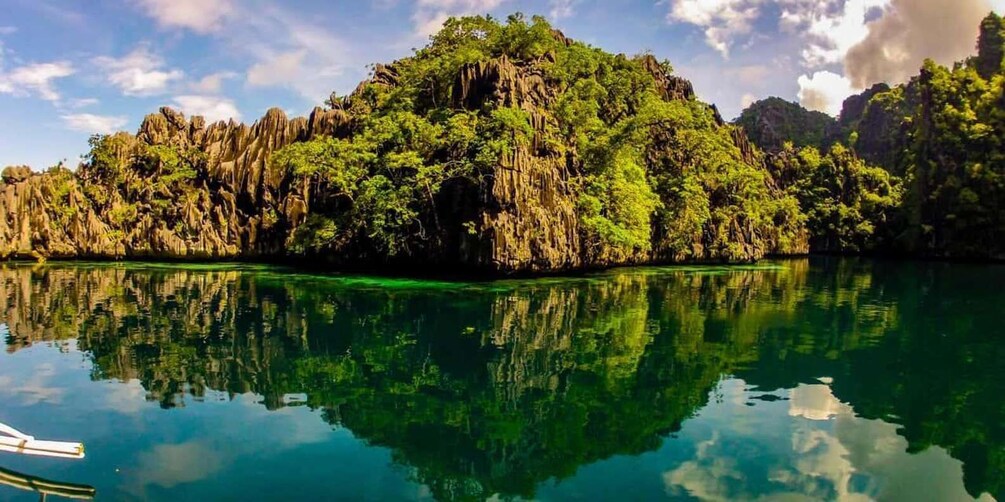
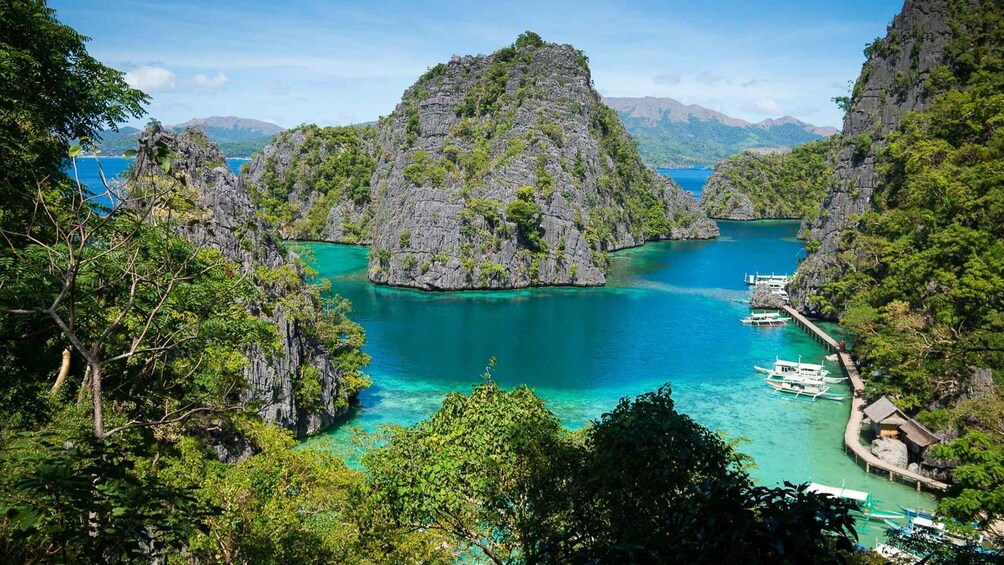
After hotel pickup, set off to discover the delights of Coron Island. First, board a boat to hop over to Kayangan Lake, a small, scenic mountain lake with crystal-clear waters famed for its beauty. Discover why it's so popular for snorkelling and swimming.
Then, take in Twin Lagoon, where the warm water from the open sea meets the pure water from the subterranean river. Feel the warm seawater on your skin as you step off the boat before feeling it become cooler as you head further into the lagoon and it turns to freshwater.
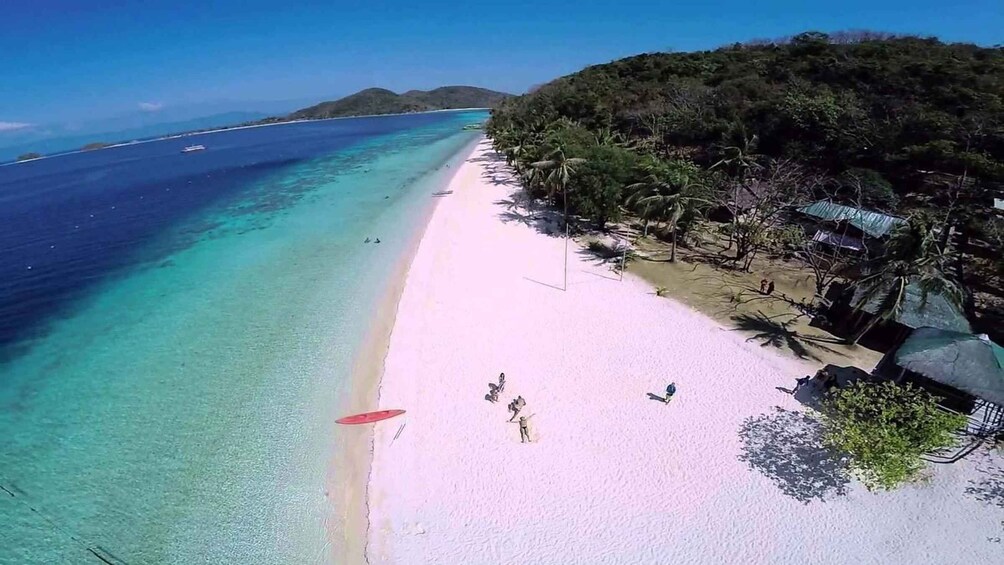
Next, head to Sunset Beach, where you can swim in crystal-clear waters, snorkel to discover the underwater life, or just relax on the beach. Admire the traditional huts known as kubo. Then, head to the hidden gem and deep sanctuary known as Reef Garden, with its variety of corals and tropical fish.
Visit Skeleton Wreck, a small fishing boat located at Coron Island. Most of the boat has weathered away, leaving the ribs, hence the name skeleton. Keep your eyes peeled for the macro life hiding here. Next, take in Lusong Coral Garden, a deeper coral reef sanctuary.
Finally, take a trip to Cyc Beach. Admire the mangrove trees backing this white-sand beach. Enjoy snorkelling in the clear water among unique fish and coral. Finally, return to Coran Town Proper, having explored the beautiful natural wonders of Coron Island.
A reef garden is a vibrant underwater landscape made up of corals, marine plants, and colourful sea life that grow together like a natural garden beneath the ocean’s surface. Found in tropical and subtropical waters—especially in regions such as the Great Barrier Reef—reef gardens are formed by coral colonies that create intricate structures over time.
A coral garden is a colourful underwater habitat where different species of corals grow closely together, forming structures that resemble a blooming garden beneath the sea. These vibrant ecosystems provide food and shelter for many marine animals, including fish, sea turtles, and small invertebrates, while also helping protect coastlines and support ocean biodiversity.