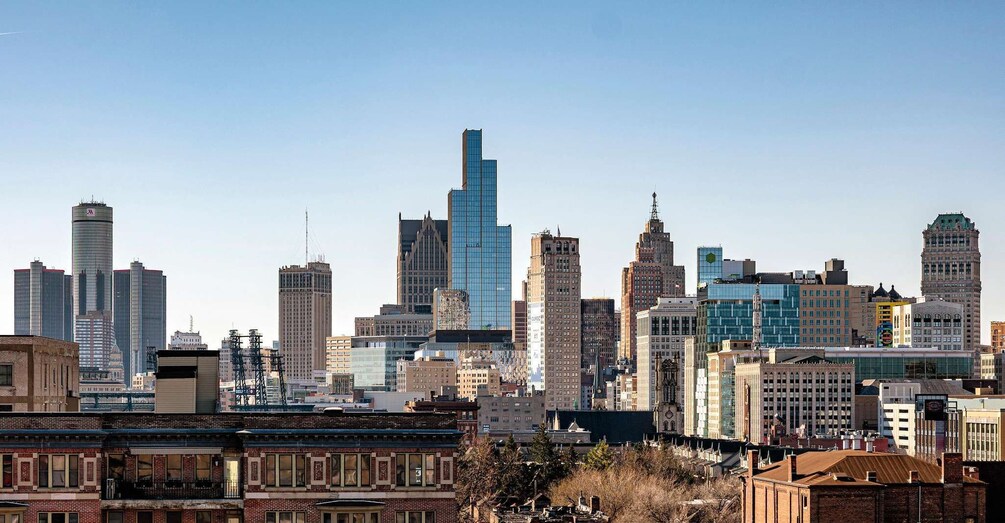
Begin your walking tour of Detroit in Campus Martius, the city’s “Field of Mars.” Learn about the city’s rebirth after the 1805 fire and the bold vision of Augustus Woodward, the territorial judge who championed a city plan inspired by Washington, DC and Paris, France. Trace more than 200 years of change to the buildings and monuments that have defined this iconic square.
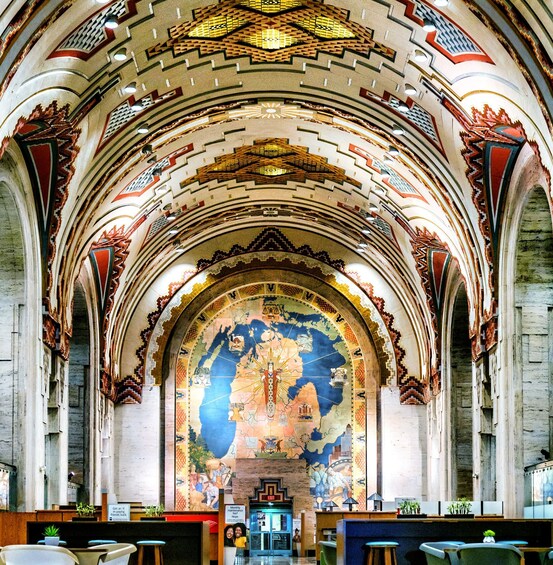
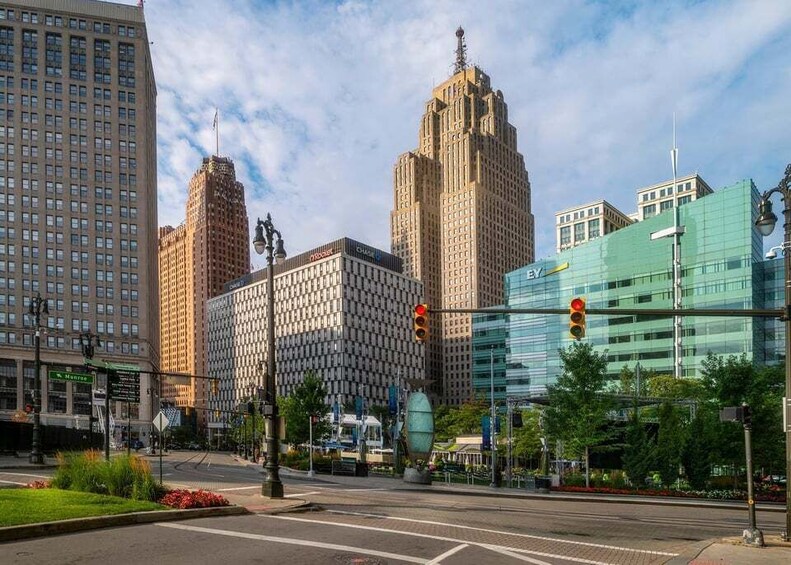
Next, step back in time along Griswold Street, “The Wall Street of Detroit,” home to one of the finest collections of skyscrapers from the 1910s and 1920s. Venture inside two historic gems, the Guardian Building and the Dime Building (now Chrysler House), showcasing the brilliance of Detroit-based and Chicago-based architects alike. Uncover the remarkable storey of how jazz history was made in a theatre just one block away.
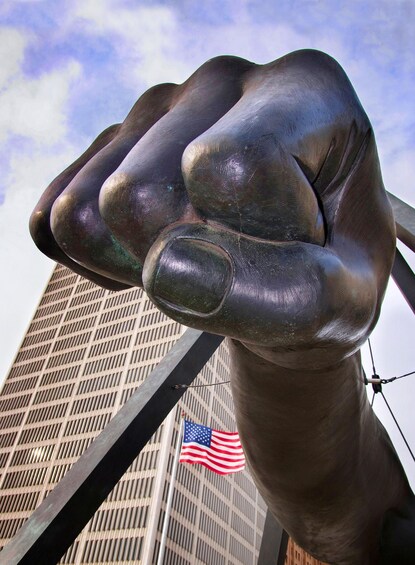
Continue to Jefferson Avenue and hear stories of secret passages and daring crossings of the Underground Railway movement in the 1800s, a church moved wholesale to save it from demolition, and the legacies of Joe Louis and “The Fist” sculpture. Take in the “Spirit of Detroit,” learn how a Detroit skyscraper set the template for the original World Trade Centre in New York, and learn where Rev. Dr. Martin Luther King, Jr. first delivered his historic “I Have a Dream” speech.
Next, visit Cadillac Square, first envisioned by Woodward as a grand boulevard, Cadillac Square evolved over time into a vibrant public square. Today it is flanked by some of Detroit’s finest architectural gems and some quirky ones, including Detroit’s very own Flatiron Building, and carries the layered history of a city that has always reimagined itself.
Continue to Black Bottom, named by French settlers for its rich, dark soil, Black Bottom is a area with a complex and culturally-important history. Visit its western edge, first settled by German immigrants and later home to waves of newcomers from many countries. By the 1930s and ’40s it had become a vibrant Black community, before urban renewal and motorway construction devastated what had been built. Here, learn about key figures in the Underground Railway movement, the storey of Detroit’s first Black church, and stroll Monroe Street, now known the world over as Detroit’s Greektown.
Next, visit Grand Circus Park, meant to be the central hub of Woodward’s ambitious radial street plan, though it was ultimately only half completed. The surrounding district became home to one of the country’s densest and most architecturally significant theatre districts, flourishing through the 1930s and ’40s. Explore the grandeur that once was, and what continues to endure today.
Finally, visit Capitol Park, Detroit was Michigan’s very first capital city, and Capitol Park was home to the original Capitol building. But the park holds another vital storey: just across the street stood an important stop on the Underground Railway, where freedom-seekers, pausing on their long journey north, found refuge and hope on their way to Canada.