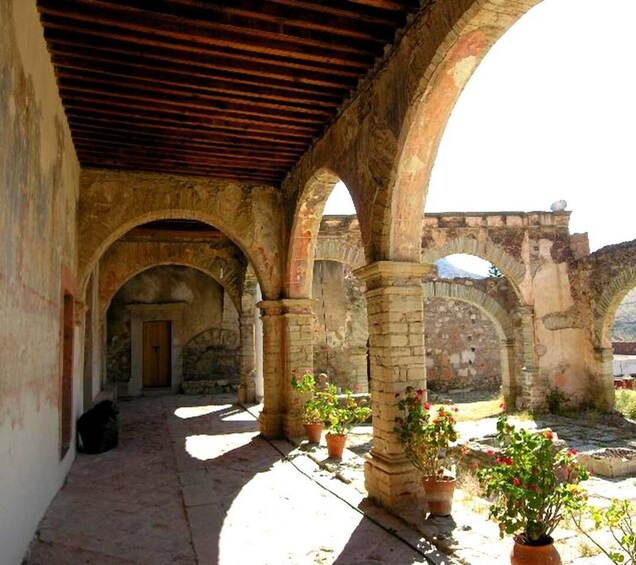
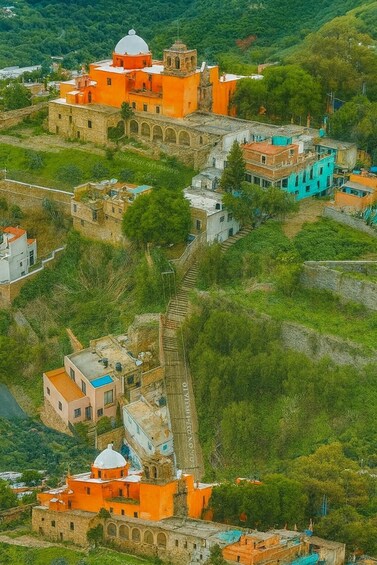
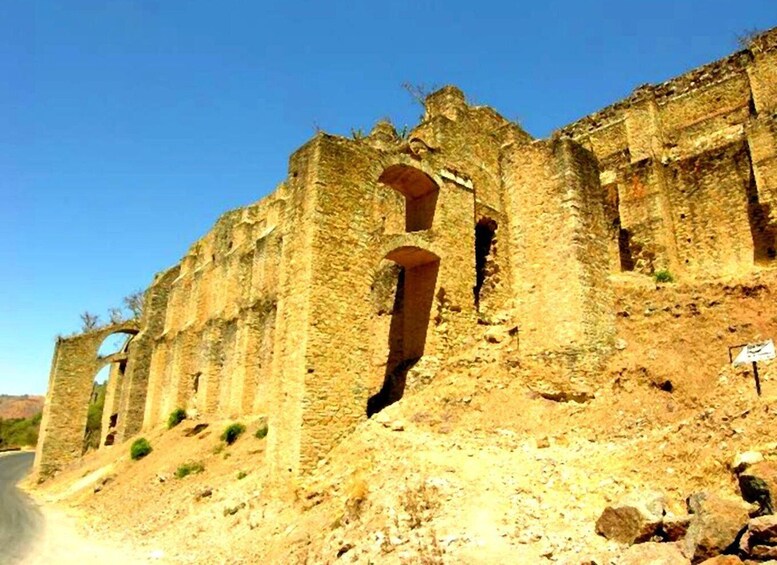
We'll start in Plaza de la Paz and head to the Valenciana area, where we'll visit the Valenciana Mine, discovered between the 16th and 18th centuries, and the Tiro de Guadalupe. You'll have the opportunity to enter the Valenciana Mine accompanied by a geologist, who will explain its construction, historical mining techniques, and the most relevant geological facts about the Veta Madre, a formation over 25 km long that runs through Valenciana, Cata, Mellado, Sirena, and Rayas, rich in silver and gold. You'll also see the magnificent Church of San Cayetano, a symbol of mining splendour, and you can browse local shops selling minerals and handicrafts.
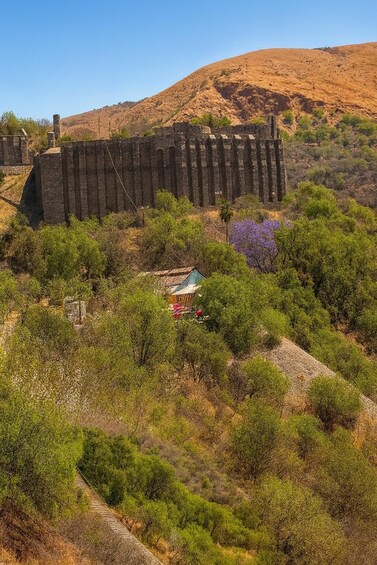
We'll then continue to the Cata area, visiting the Cata mine, the former Villaseca hacienda, the Bustos hacienda, the Don Quixote square, and the Cata church, where the Señor de Villaseca is venerated. Later, we'll head to Mellado, perched atop a hill with stunning views, to see Mellado Plaza, the Church of Our Lady of Mercy, the Chapel of the Lord of Labour, the Hospice of Santa Fe, the San Juan de Rayas Mining Town, the Tiro de Mellado, and the Garrapata Mine.
In Mellado, you can also see a historic stretch of the Camino Real de Tierra Adentro, one of the most important trade and cultural routes of the Viceroyalty of New Spain. This road, also known as the Camino de la Plata (Silver Road), stretched for over 2,500 kilometres from Mexico City to Santa Fe, in what is now the United States, and was actively used between the 16th and 19th centuries. Its main function was to connect the mining areas of the north, such as Zacatecas, Guanajuato, and Chihuahua, with the administrative and commercial centers of the south.
We'll wrap up the tour at the iconic Rayas Mine, a testament to Guanajuato's mining prowess, and then take you back to Plaza de la Paz.