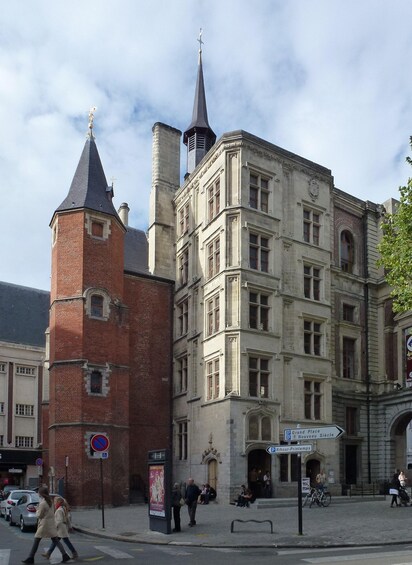
Begin your tour at Place Rihour and the Palais Rihour, a former Burgundian palace symbolising Lille’s political importance in the 15th century. Though largely destroyed by fires, its remaining Gothic elements highlight the city’s medieval power and later transformations under French rule.
At the Grand’Place (Place du Général-de-Gaulle), discover Lille’s historic commercial heart. Long a centre for markets, public events, and political life, the square reflects centuries of trade and urban activity. Its surrounding buildings showcase a rich mix of Flemish Renaissance, classical, and modern architectural styles.
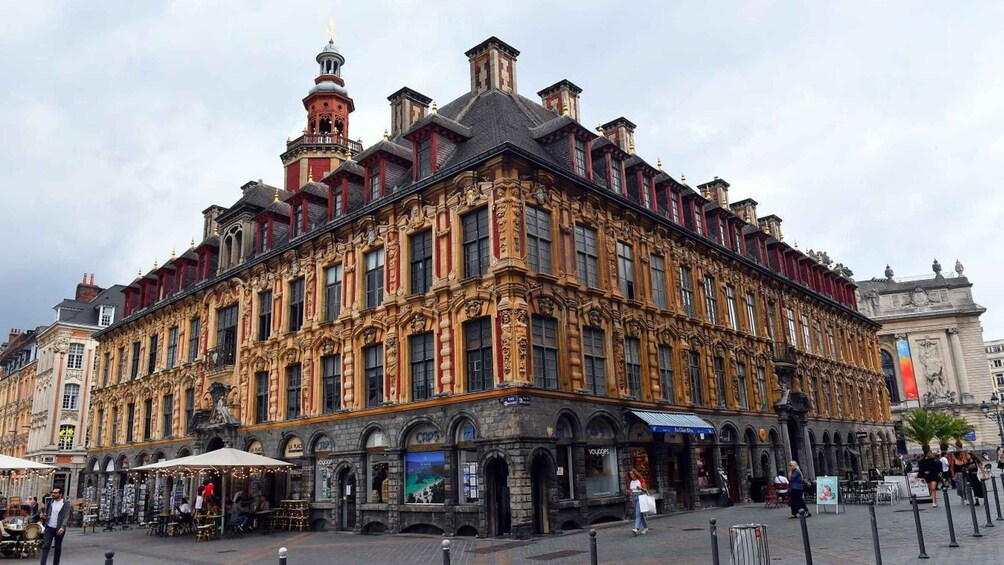
The nearby Vieille Bourse (Old Stock Exchange) represents Lille’s economic golden age under Spanish rule in the 17th century. Built in Flemish Mannerist style, it symbolises the city’s prosperity and international trade connections and remains today a lively cultural space.
Continue along Rue de Gand, a picturesque street in Old Lille known for its Flemish stepped gables and traditional estaminets. These historic taverns reflect Lille’s social life and enduring Flemish traditions, linking architecture, cuisine, and communal culture.
On Rue de la Monnaie, one of Lille’s oldest streets, the tour highlights medieval urban planning, royal power through the former mint established by Louis XIV, and the Hospice Comtesse, a symbol of medieval charity and social care.
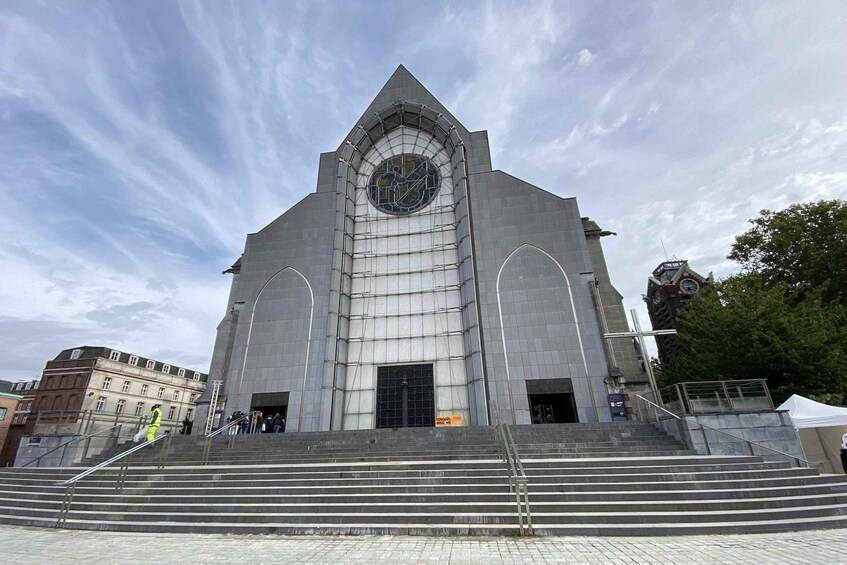
At Notre-Dame-de-la-Treille Cathedral, the contrast between history and modernity becomes clear. Built between the 19th and 20th centuries, its neo-Gothic interior and contemporary marble façade illustrate Lille’s evolving religious and architectural identity. Nearby, the “little yellow house” evokes the city’s medieval past.
Conclude your tour at Quai du Wault, along the former river port of the Deûle. This site recalls Lille’s origins as a trading city and the vital role of waterways in its economic growth and military defence.