Departing from Nagoya Station in the early morning, heading east, the scenery outside the window unfolds gradually—from urban buildings to rural low mountains, and then the silhouette of the Northern Alps faintly emerges on the horizon. About three and a half hours later, as the altitude rises and the air turns crisp and cool, the gateway to Kamikochi opens for you.
The bus arrives at Kamikochi Bus Terminal, and from here begins a full three and a half hours of free strolling. No need to rush, no need to worry—this secret highland, gently traversed by the Azusa River, awaits your steps at its own pace.
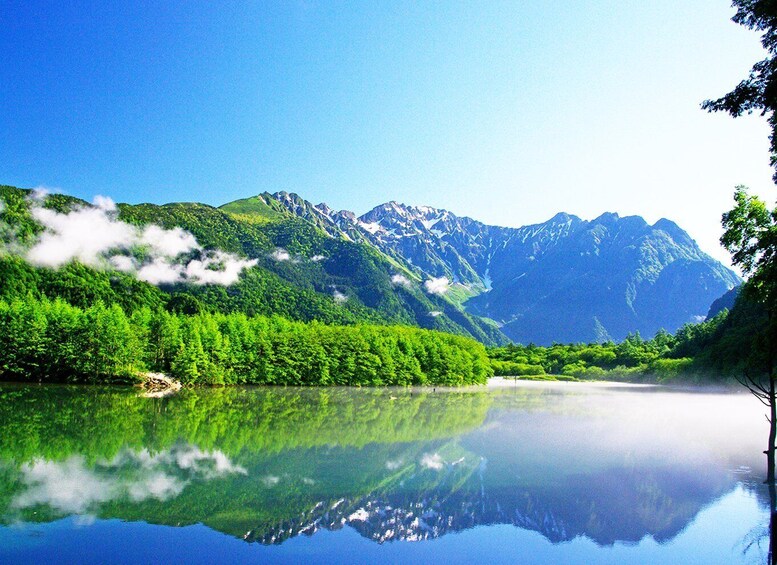
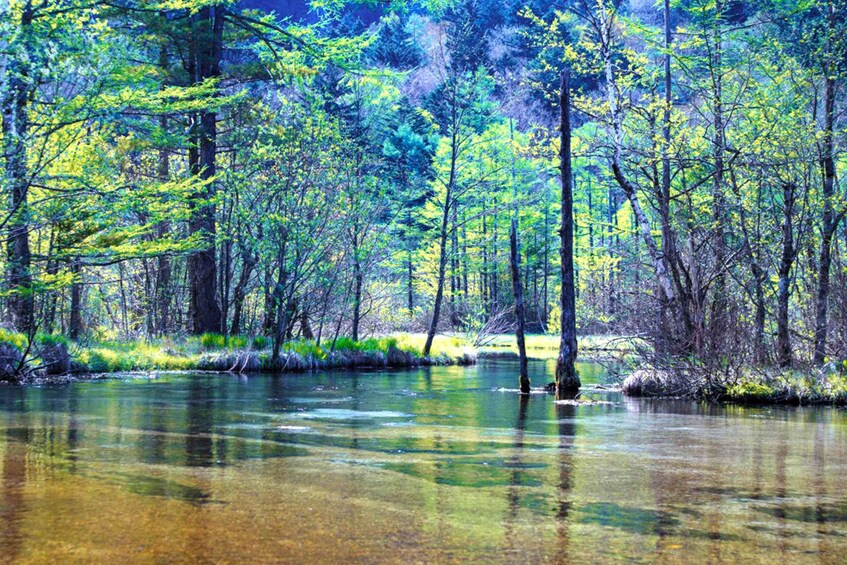
Your first stop can be Taisho Pond. This lake, born from the 1915 eruption of Mount Yake, still retains the unique tranquility of a volcanic crater lake. The standing dead trees on the surface are relics of time, presenting completely different picturesque scenes with the changing light—morning mist, noon, sunset. The water is like a mirror, reflecting Mount Yake and the Hotaka peaks, where heaven and earth are in symmetry.
Walk along the right bank trail of the Azusa River towards Tashiro Pond. This 40-minute forest path cuts through the dimness of coniferous woods, with occasional light filtering through the branches and leaves. Tashiro Pond is a shallow wetland, with fresh green like a carpet in May, golden leaves in October, and thin ice over water in late autumn—every step feels like treading on the skin of the seasons.
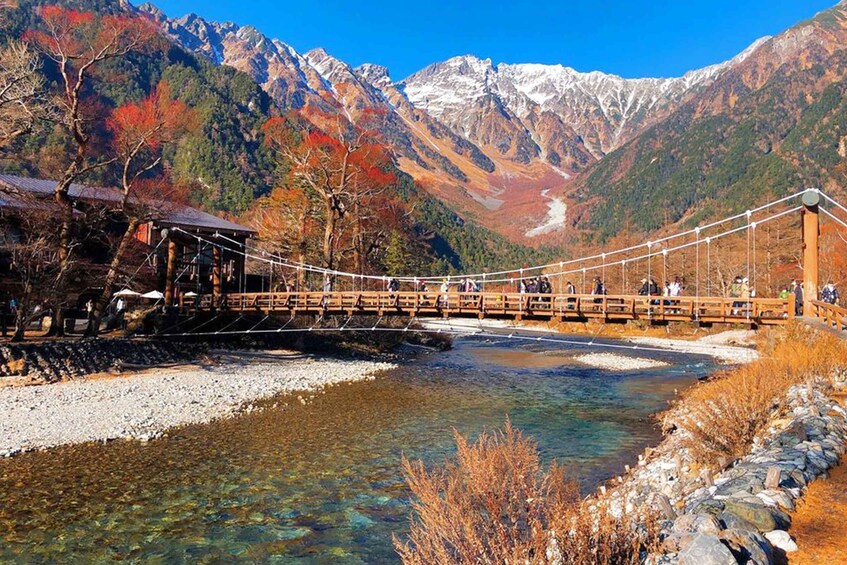
Continuing north, Kappa Bridge quietly awaits not far ahead. This is the most symbolic landmark of Kamikochi. From the bridge, the ridgeline of the Hotaka peaks appears both sharp and gentle, and the flow of the Azusa River is so clear it’s almost transparent.
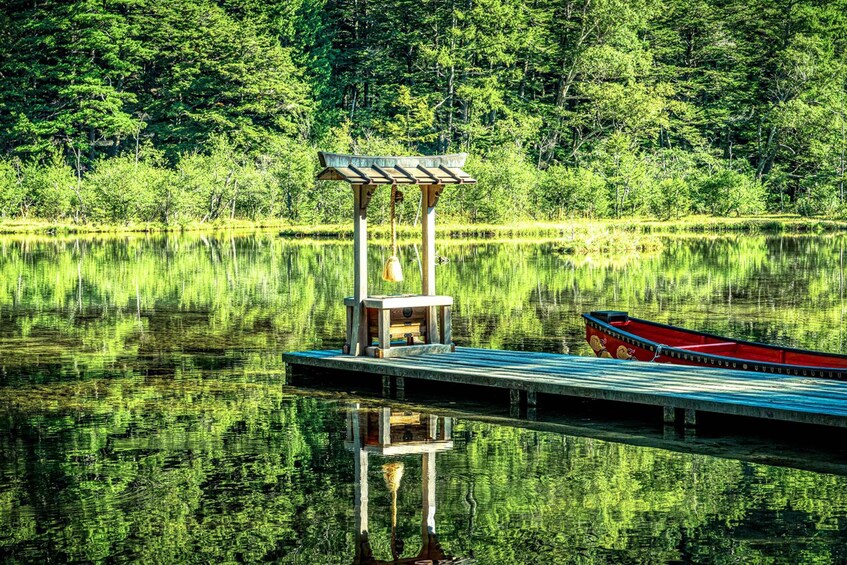
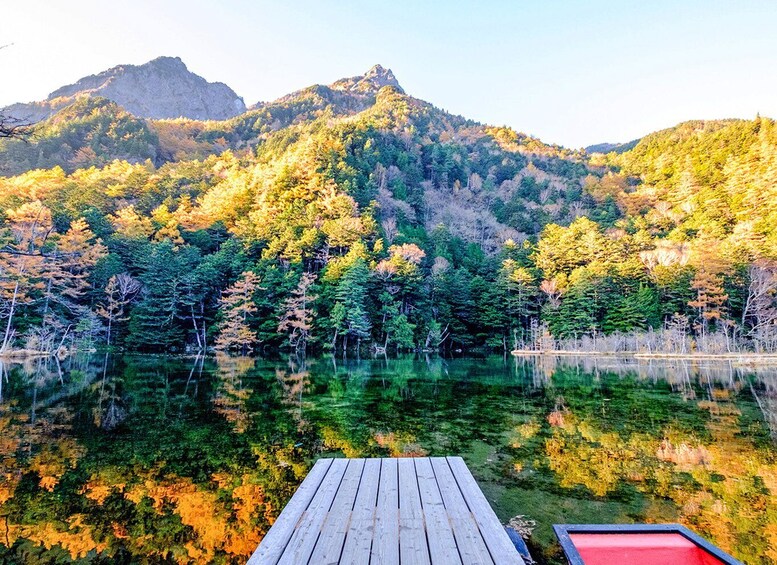
If you have the energy, consider continuing along the left bank trail towards Myojin Pond. This 60-minute journey passes through the forest of Konashidaira and crosses the debris flow remains of Shimosawasawa, with Mount Yake always watching ahead. Myojin Pond is the sacred domain of the Okumiya of Hotaka Shrine. The pond is calm and rippleless, wild birds sing in the woods, and skunk cabbages droop by the shore.
Before returning, don’t forget to look up at the Hotaka peaks. Mount Okuhotaka—Japan’s third highest peak, honoured with titles such as “Japan’s 100 Famous Mountains” and “100 Famous Flower Mountains”—is the silent guardian of this highland. And Mount Yake, the only active volcano in the Northern Alps, still gently puffs smoke along the ridge, reminding us that the land beneath our feet is still alive.
Around 3 PM, the bus departs from the terminal for the return journey. You came with anticipation; you leave laden with photos and memories. At 7 PM, the lights of Nagoya Station welcome you once more, marking the end of a one-day mountain journey in the city’s neon glow. This is not just a day trip, but a brief symbiosis with the Japan Alps. We look forward to meeting you on this unforgettable journey!