Compare five teas grown in Nara side by side, and find the differences in aroma, flavour and roast with your own palate.
You do not simply learn the etiquette. You taste your bowl having understood the thinking behind omotenashi and the background of the utensils.
The tasting is followed by the tea ceremony itself, so the whole session runs in one line - from knowing tea to whisking a bowl of it.
Nara is where tea whisks are made, and you take home the relationship between Nara and tea as a whole.
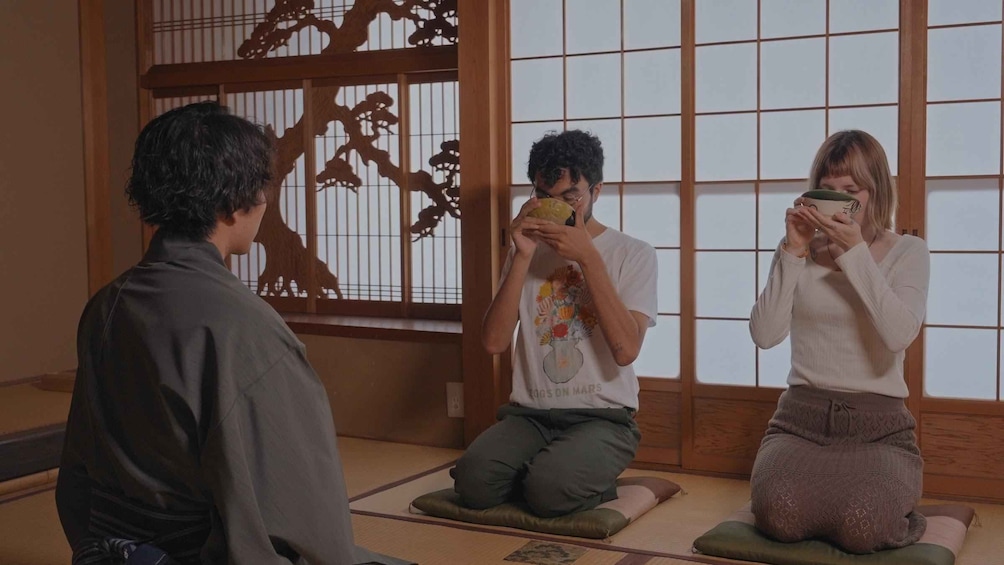
You step through the entrance of a machiya in Naramachi, where a host in kimono welcomes you into a tatami tea room, softly lit through shoji paper screens.
Five teas grown in Nara are laid out side by side. Tasting them one after another, you explore the character of each through differences in aroma, flavour and depth of roast.
Next, we go through the basic etiquette of a tea gathering and the frame of mind behind it - how to bow, how to handle the utensils - without any formality.
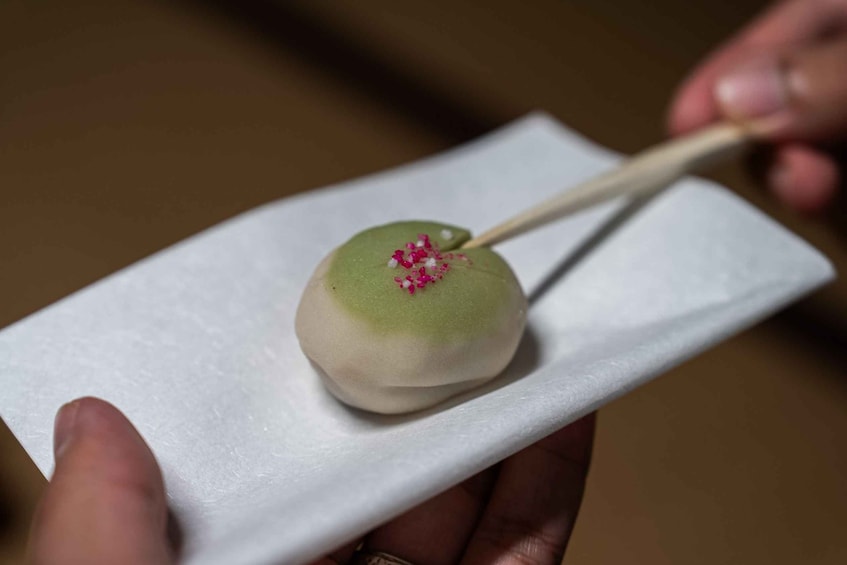
A seasonal wagashi (traditional Japanese sweet) is served, made to be enjoyed first with the eyes and then with the tongue.
- Your host whisks a bowl of matcha for you. Take your time with it, letting your senses settle on the scent, the colour and the finish.
We talk unhurriedly about the culture that tea has shaped, and about omotenashi - the idea of hospitality at the centre of it.
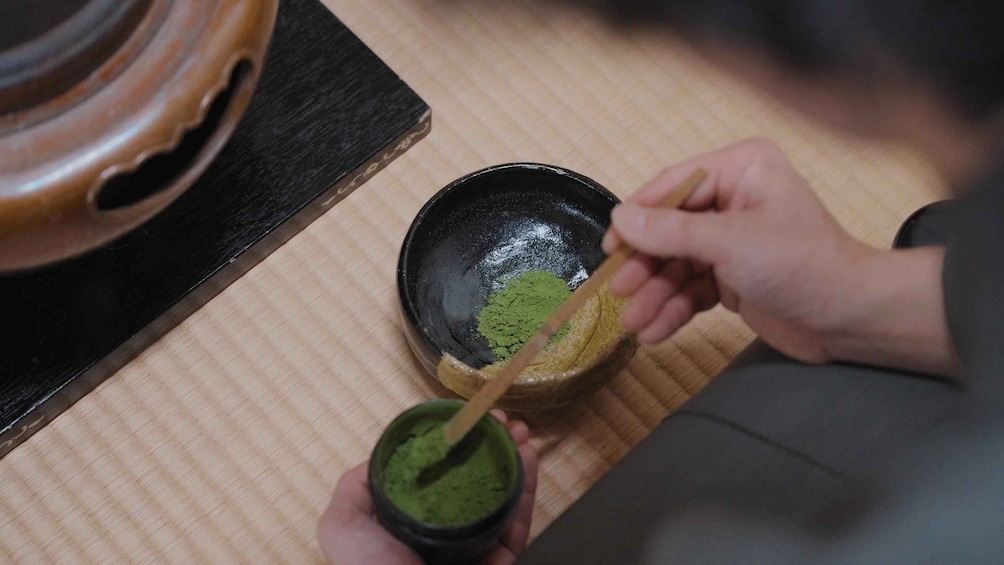
Choose the bowl you like, warm your hands with hot water, and then whisk a bowl of matcha with your own hands.
We show you how a chasen is made in Takayama in Nara, the source of roughly 95% of Japan's handmade tea whisks.
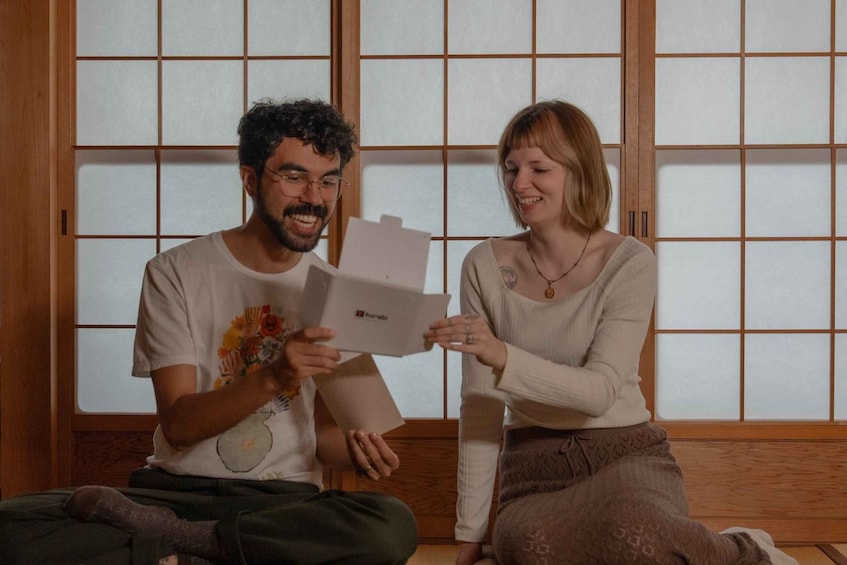
If you would like, your Nara-born host will point you towards local shops and lanes that no guidebook lists.
Whisk matcha with your own hands and leave knowing how it is done.
See how a chasen is made - 95% of Japan's tea whisks come from Nara.