In a tatami tea room, welcomed by a host in kimono, you spend a calm tea gathering that only a small group makes possible.
You do not simply learn the etiquette. You taste your bowl having understood the thinking behind omotenashi and the background of the utensils.
At the end you whisk your own matcha, and take home a memory along with a storey only Nara, the home of the tea whisk, can tell.
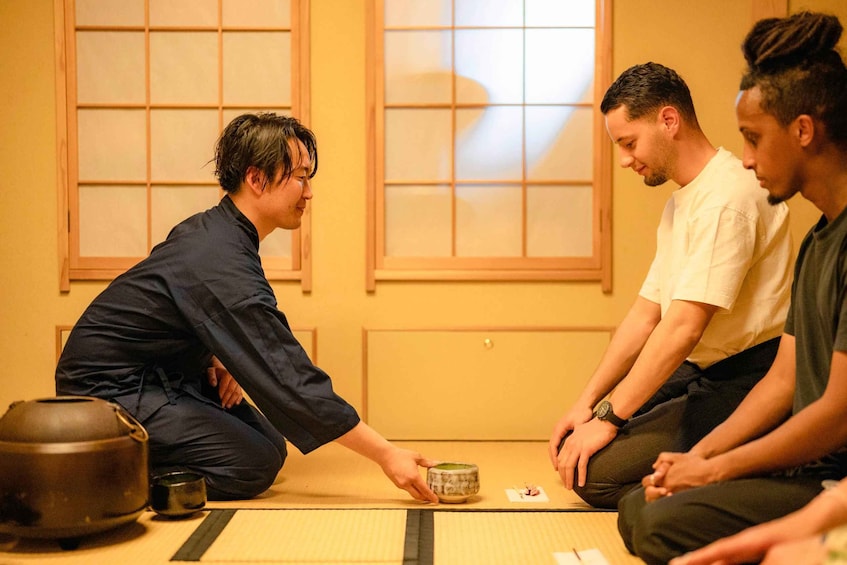
You step through the entrance of a machiya in Naramachi, where a host in kimono welcomes you into a tatami tea room, softly lit through shoji paper screens.
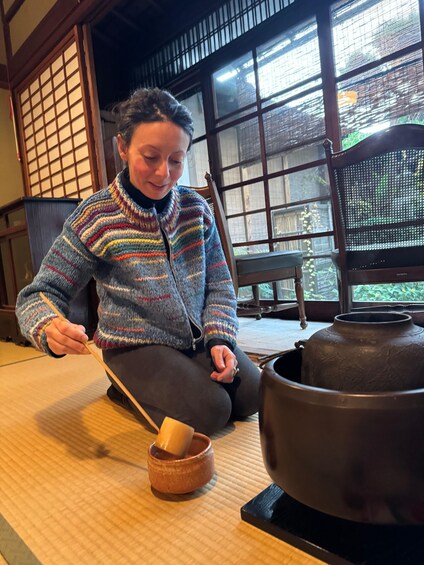
First, a cup of hojicha and a moment to settle. We go through the basic etiquette of a tea gathering - how to bow, how to handle the utensils - without any formality.
A seasonal wagashi (traditional Japanese sweet) is served, made to be enjoyed first with the eyes and then with the tongue.
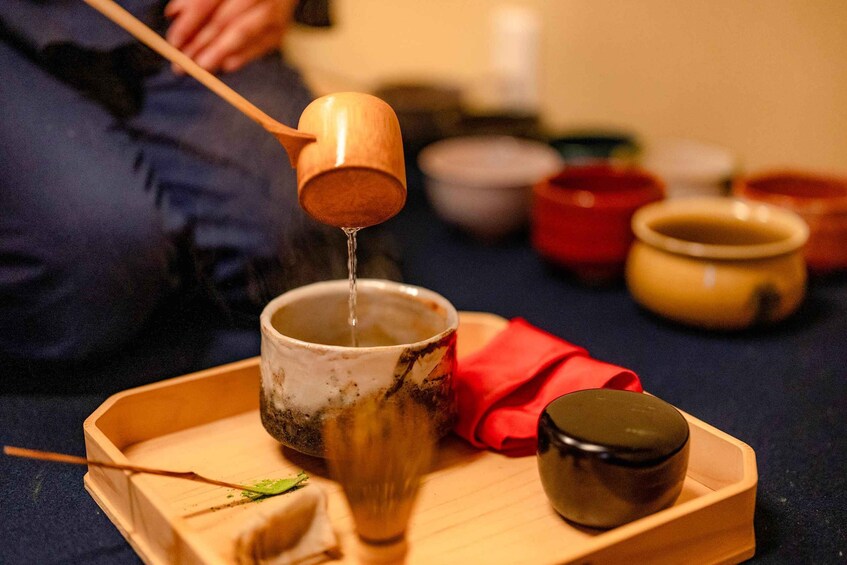
Your host whisks a bowl of matcha for you. Take your time with it, letting your senses settle on the scent, the colour and the finish.
We talk unhurriedly about the culture that tea has shaped, and about omotenashi - the idea of hospitality at the centre of it.
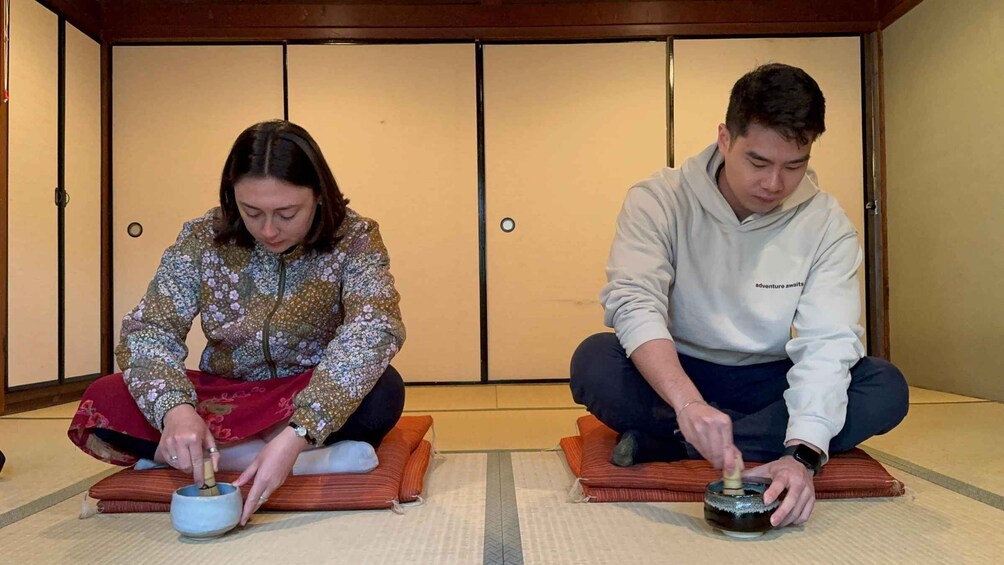
Choose the bowl you like, warm your hands with hot water, and then whisk a bowl of matcha with your own hands.
We show you how a chasen is made in Takayama in Nara, the source of roughly 95% of Japan's handmade tea whisks.
If you would like, your Nara-born host will point you towards local shops and lanes that no guidebook lists.
See how a chasen is made - 95% of Japan's tea whisks come from Nara.