Begin your adventure in Nerja, where you’ll be picked up at the bus station. Once in the van and on your way to the Boquete de Zafarraya, hear about the different landscapes that you will encounter and get a rundown of what to expect during this Via Ferrata.
Arrive at the area, where local farms, fauna and flora, and a karstic mountain create a spectacular landscape. Get a run down on the equipment and safety, but that’s just where the show begins.
This Via Ferrata has a cultural visit right before the adrenaline starts pumping. A particularly fascinating aspect of this area is that art is combined with the landscape. Wood, stones and earth are the materials used to shape this peculiar artwork, which will be explained in detail from beginning to end.
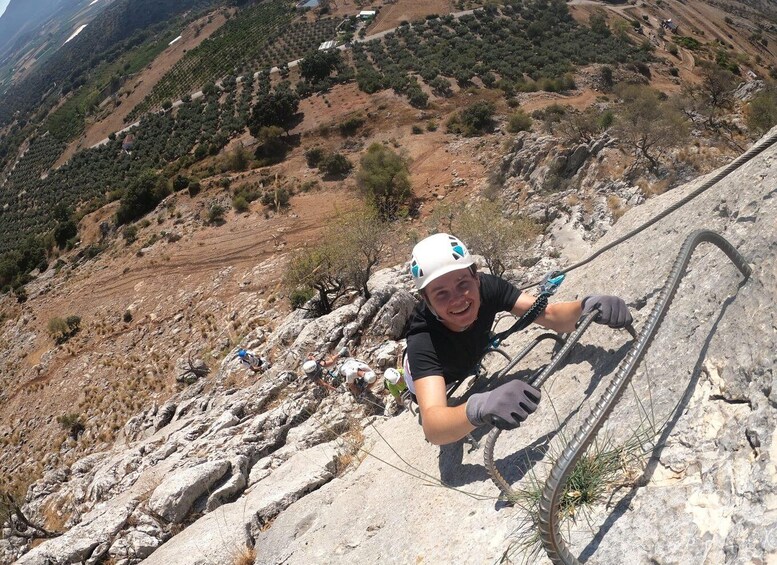
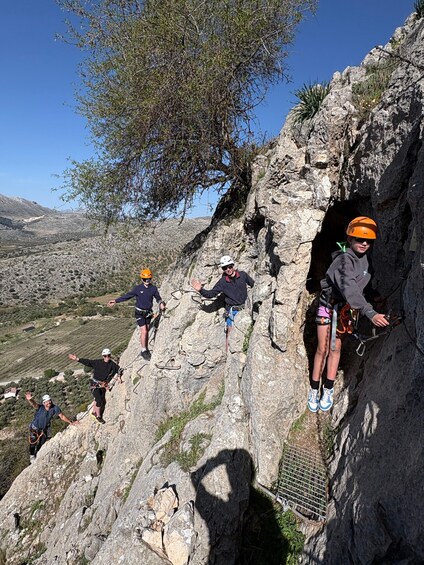
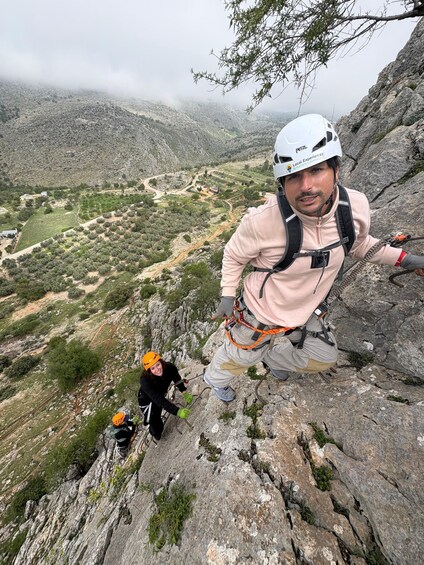
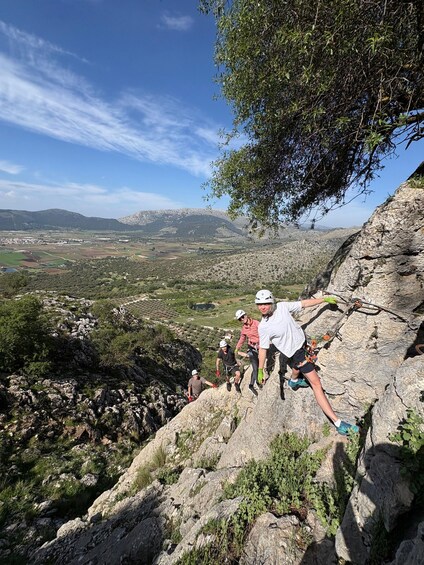
After the natural museum, talk a bit about the Via Ferrata and get a small demonstration on technique and safety. Then, put your equipment on and get some final instructions before letting yourself be carried away by a vertical traverse that has never failed to bring excitement to those who’ve tried it.
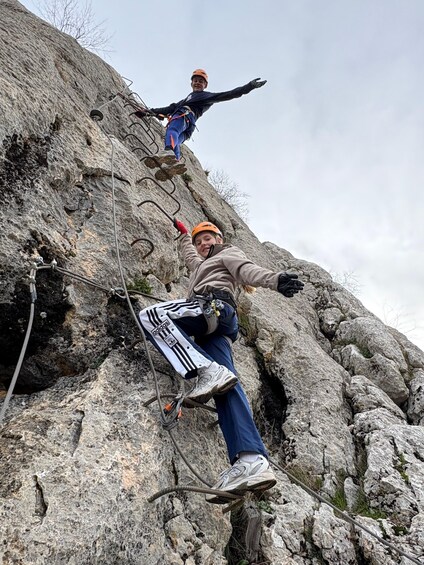
Steel steps mark the route, which features long and entertaining zip-line jumps here and there (actually, there’s three of them: one that’s 25 metres, another that’s 35m and a last one that’s 10m) and both monkey and Tibetan bridges. Do not let their names scare you because ultimately this Via Ferrata offers adrenaline in abundance and is ideal for beginners and veterans alike. Why? Because this section has various alternative routes that are less intimidating in case there’s something you do not feel comfortable doing.
After about 3 hours of Via Ferrata, jump into the van, take your equipment off and have an eco-picnic with fresh locally produced snacks. The icing on the cake comes when you receive the pictures and videos that will have been captured with a GoPro along the entire route (that evening or the next day).