Two things you won't find in Shinjuku: a sumo ring anyone can step onto, and a part of Tokyo that isn't built for tourists. Here, you get both.
A real ring — and you can step on it.
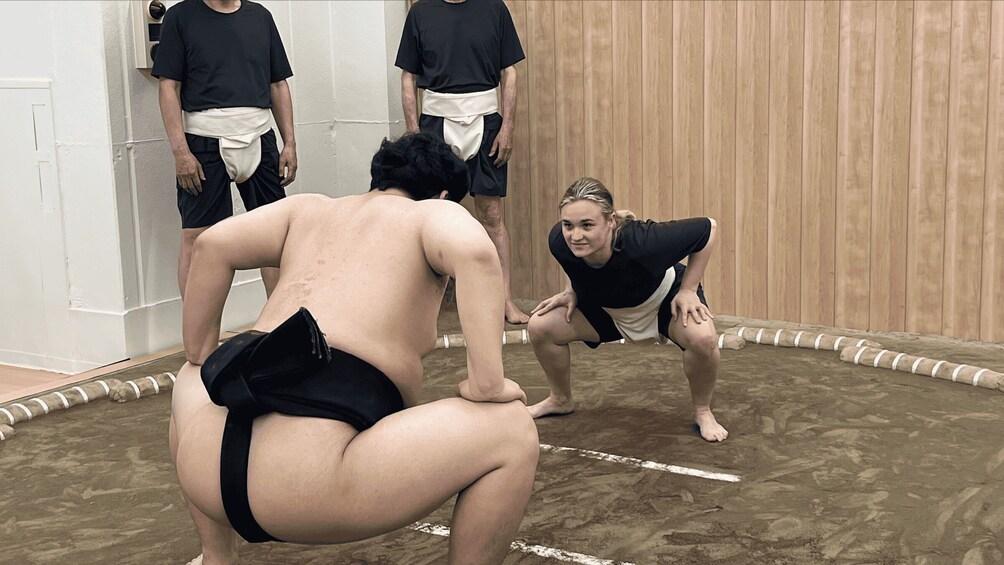
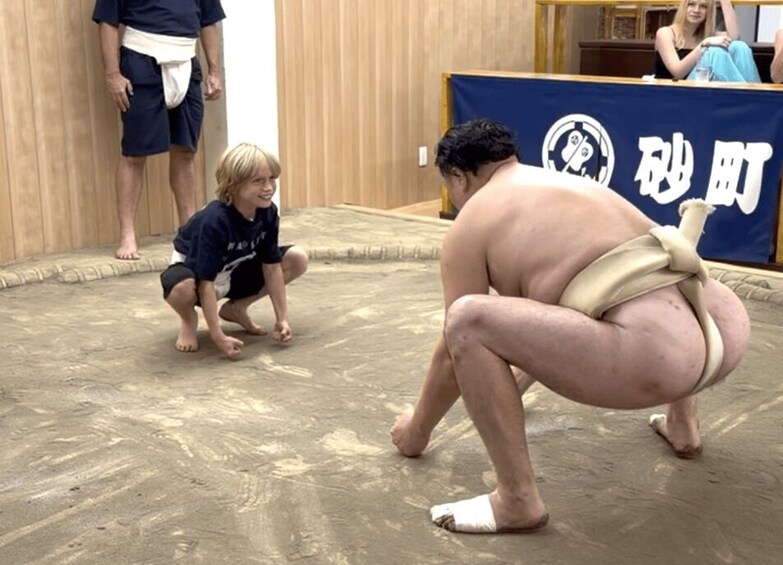
Professional sumo doesn't allow women onto the ring. Here, everyone can. Our dohyo is the real thing. After two former pros train and face off just metres in front of you, you can put on a real mawashi and step onto it barefoot to take one on yourself. You'll lose — that's the point. Prefer to watch? That's fine, and you can still step onto the ring for photos afterwards.
A real area — not a tourist set.
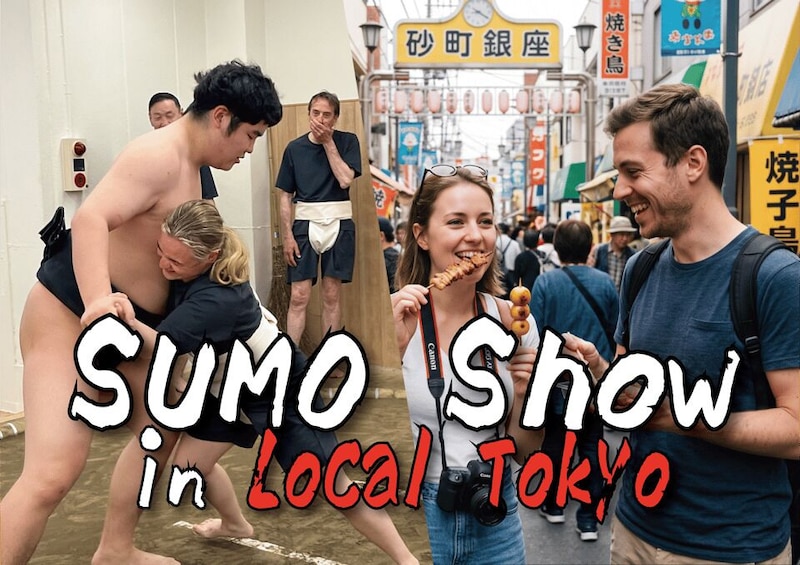
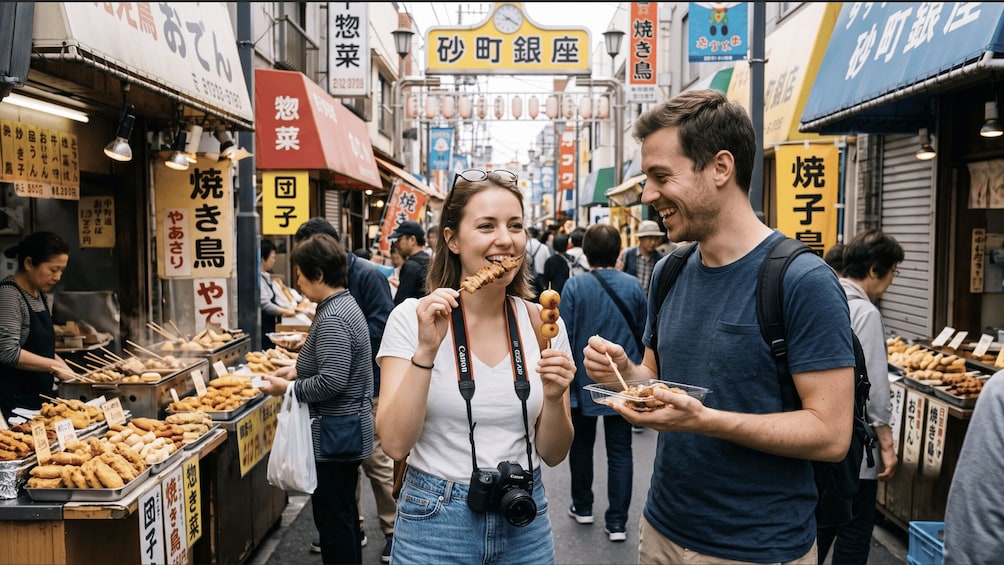
Almost every sumo experience in Tokyo calls itself “authentic,” then runs in a polished tourist district with a fixed tourist meal. This one is in Koto, on Sunamachi Ginza — one of Tokyo's three great shopping streets: 140 shops along 670 metres, open since 1932, still visited by 15,000 locals on an ordinary day. You're not shown old Tokyo in a show. You're standing in it.
Real food you choose yourself.
Come 30–45 minutes early and walk the street: yakitori, croquettes, fresh seafood, traditional sweets, drinks. Pick whatever you like and bring it in to eat by the ring. There's no set menu on purpose — you eat the neighborhood's own specialities, chosen by you, not a generic tourist plate. This is the food locals actually eat.
How it runs (about 90 minutes):
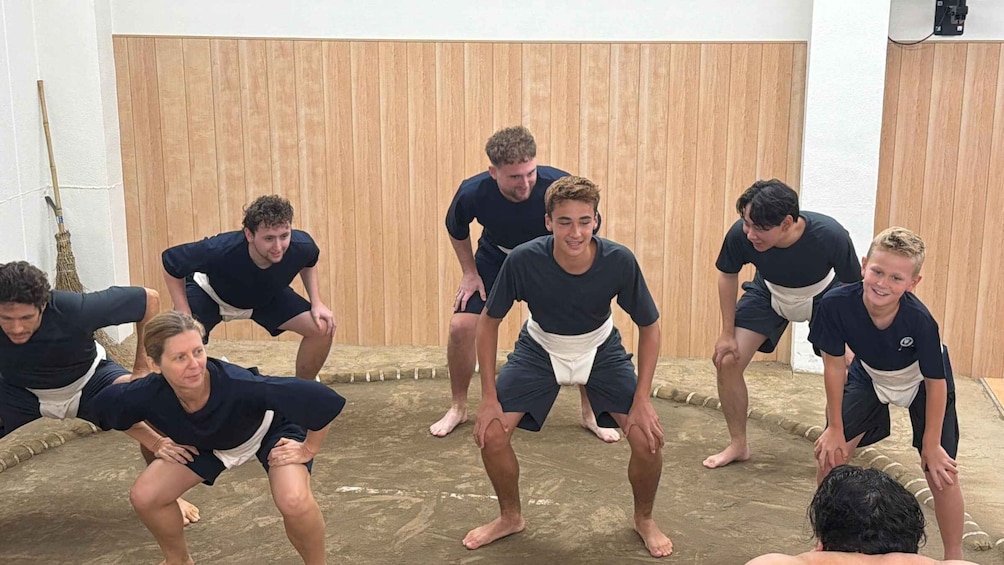
30 min — How sumo really works. An English-speaking host explains the history, the rituals, why they throw salt, and how a bout is won.
30 min — The wrestlers. Two former pros train and then face off in real bouts, just metres away. No stage, no barrier, no stadium seats. Guests always talk about the sound.
30 min — Your turn (optional). Change into a real mawashi in a private area and take on a wrestler — or simply step onto the ring for photos.
Afterwards, ask the wrestlers about their training and daily life, and take photos together on the ring.
Easy to reach — and worth it.
It's a short trip out from the centre, and that's exactly why it still feels real. We'll send clear directions when you book. Shows run year-round, almost every day. Since Tokyo's grand tournaments are only held in January, May and September, this is the best way to see real sumo up close for most of the year.
English support at every show. Wheelchair accessible. Children aged 4 and up can take part; under 4 are free. Maximum 40 guests.