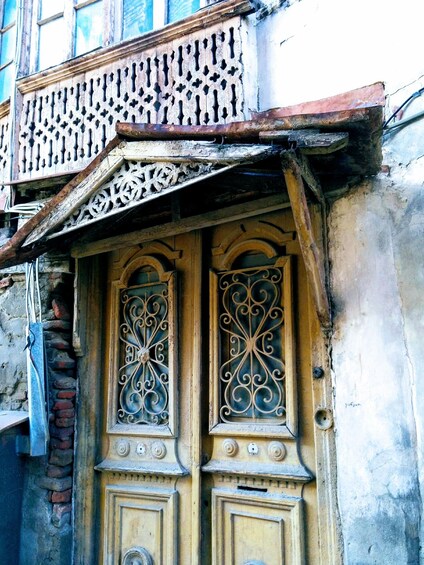
You begin at Freedom Square, where the golden St. George gleams above the city. The bustle of Rustaveli Avenue fades as you slip into the quieter lanes of Sololaki. Here, the air changes — the streets narrow, façades peel with age, and every doorway hints at a forgotten storey.
Your first discovery is on Dadiani Street towards Gudiashvili Square, a restored jewel where pastel-colored houses and wrought-iron balconies frame a leafy courtyard. It feels like stepping into a painting — a place where artists and dreamers might still gather.
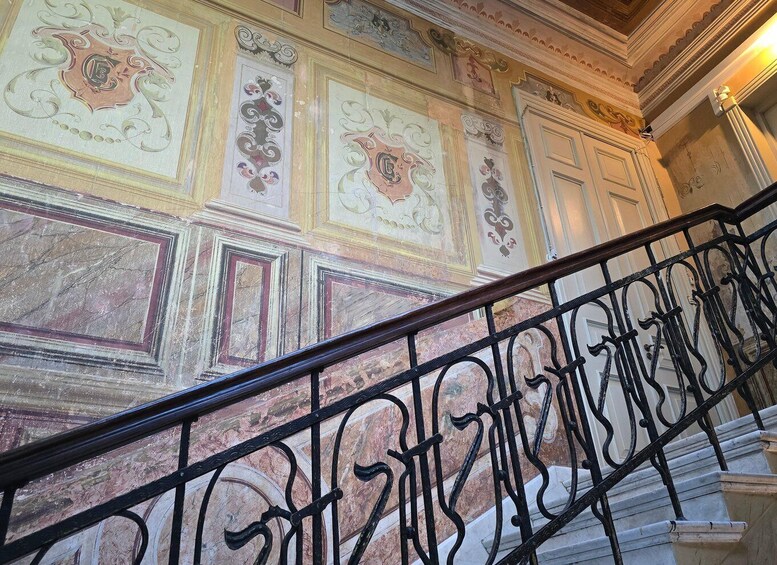
Down Tabidze Street you’re rewarded with courtyards alive with ironwork balconies, mosaic tiles, and staircases painted in fading floral motifs. These are the hidden worlds of Tbilisi, where communal life once thrived.
Turning a corner, the Gothic House rises unexpectedly, its pointed arches and vertical lines unlike anything else in the city. It feels almost theatrical, a fragment of medieval Europe transplanted into the Caucasus.
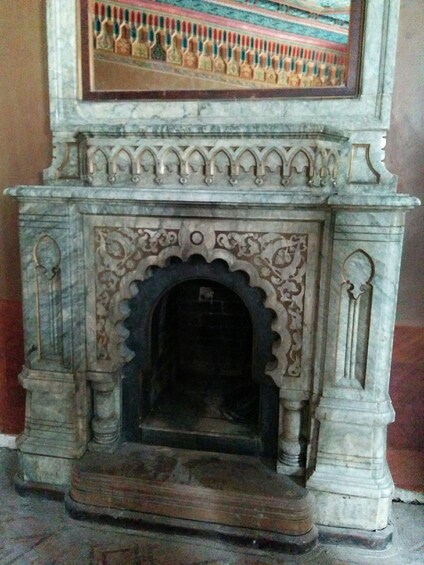
On Machabeli Street, the Writers’ House of Georgia stands proudly, a mansion that once hosted literary salons and still breathes with the spirit of poetry and debate. Nearby, the history takes a darker turn at the house where Lavrenti Beria once lived — a chilling reminder of Soviet power. Not far away, the Iranian Ambassador’s House adds exotic flair, its Persian-inspired motifs a testament to Tbilisi’s cosmopolitan past.
Have a look at a striking blend of Art Nouveau and Renaissance Revival, with eclectic touches that reflect the cosmopolitan spirit of the city. In the early 1900s, this mansion was entered into a regional architectural competition and won second place among the most beautiful houses in the Caucasus, a rare honour that placed Tbilisi alongside Baku and Yerevan in terms of architectural prestige.
The walk continues to the National Bank of Georgia. Just steps away, Ferdinand Oten’s Pharmacy offers a glimpse of old-world science and artistry.
Then comes the Devil’s House, with its horned figure carved above the window. Is it the devil, or Pan, the Greek god of shepherds? The mystery lingers as you pass by.
The route leads you to the Tbilisi State Conservatory, where music spills from rehearsal rooms, and the State Academy of Arts, a cradle of Georgian creativity. The Gigo Gabashvili House, home of the celebrated painter, reminds you that this area has always been a sanctuary for artists.
Finally, you arrive at the new cable car station in Rike Park. Take a ride to Mtatsminda for the magnificent views. Here we have an optional tasting of famous boat-shaped Acharian Khachapuri and Lagidze lemonade (optional activity, additional cost USD 15/pp).
Return to the city by funicular train on a 501-meter track designed in 1905 by Belgian engineers as part of Tbilisi’s ‘Upper City’ development plan.